

What “Individualised Training” Really Means During Pregnancy
(And Why Blanket Rules Fall Short)
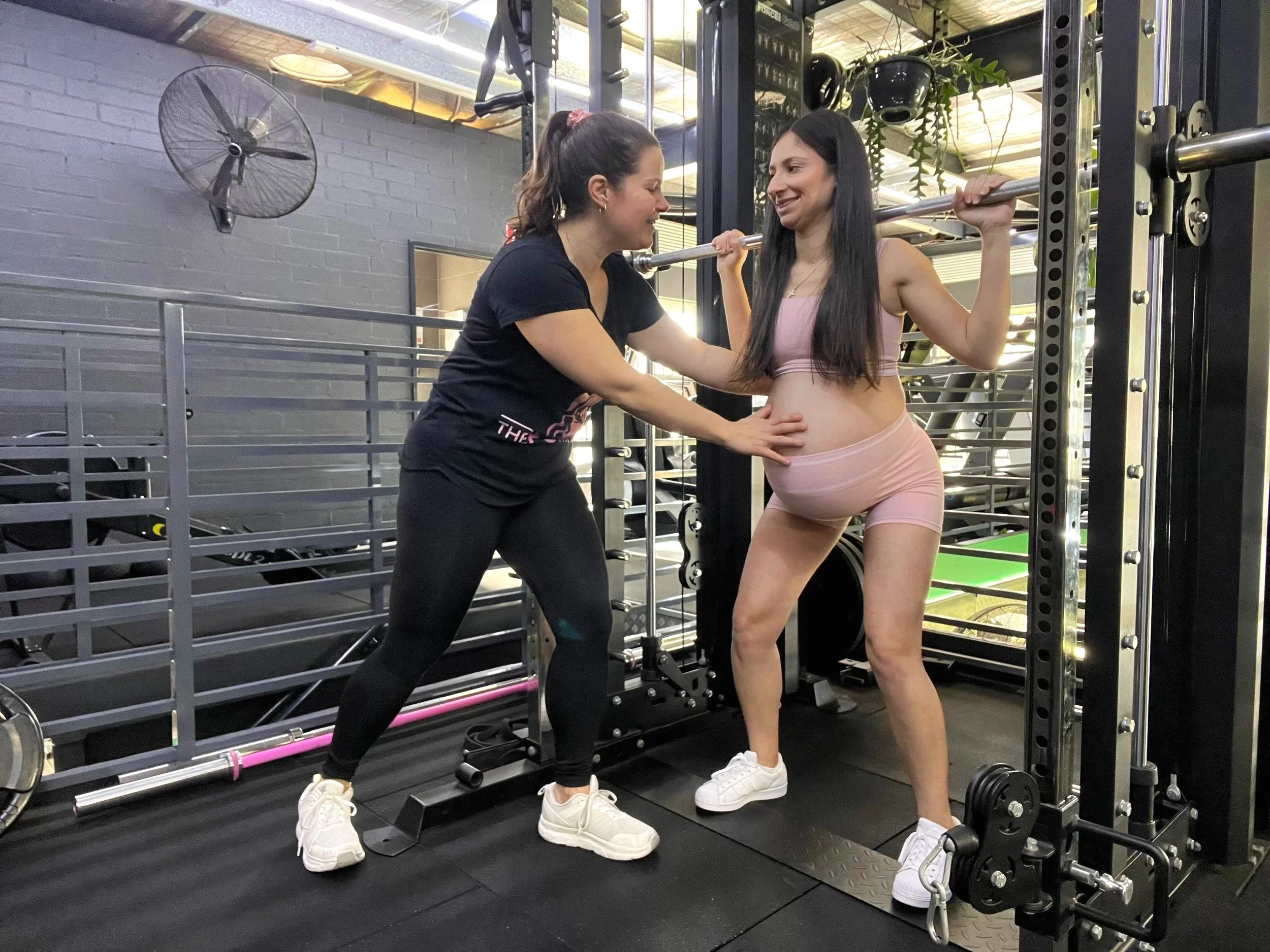
(And Why Blanket Rules Fall Short)
If you’ve spent any time searching for pregnancy exercise advice, you’ve probably seen a long list of do’s and don’ts:
“Don’t lift heavy.”
“Don’t strain.”
“Don’t raise your heart rate too much.”
“Don’t do what you used to do.”
These rules are usually well-intentioned. But they’re also overly simplistic — and for many women, confusing or fear-inducing.
As research around pregnancy and resistance training evolves, one message is becoming clearer:
Pregnancy exercise isn’t about following blanket rules — it’s about individualised guidance.
So what does individualised training actually mean in real life?
Why blanket rules became the norm
Historically, pregnancy guidelines had a single priority: safety.
When there was limited data on higher-intensity exercise or resistance training, the safest option appeared to be restriction. If we couldn’t prove something was safe, the advice became “better not.”
That’s understandable, but it also created a problem.
Blanket rules:
assume all pregnant bodies are the same
ignore training history and physical capacity
fail to adapt as pregnancy progresses
often lead to fear, deconditioning, or stopping movement altogether
And for many women, that doesn’t actually support long-term health.
What individualised training actually means
Individualised training doesn’t mean “anything goes.”
It means exercise decisions are based on the person in front of you, not a generic rule.
In pregnancy, this includes looking at:
training history (new to lifting vs experienced)
current symptoms
stage of pregnancy
recovery and fatigue levels
pelvic floor and abdominal response
overall stress, sleep, and life load
Two pregnant women can be at the same gestation and require completely different programs — and both can be training appropriately.
Why effort matters more than load
One of the biggest misunderstandings in pregnancy training is focusing on how heavy the weight is, rather than how the body responds.
Individualised programming prioritises:
quality of movement
control and stability
breathing and pressure management
perceived effort
Rather than chasing numbers, we look at questions like:
Can you maintain good technique throughout the set?
Are you finishing feeling worked, but not wiped?
Do you recover well between sessions?
Do symptoms stay stable or improve?
This is why tools like RPE (rate of perceived exertion) or reps in reserve are often more useful than percentages or max lifts during pregnancy.
One rule that doesn’t fit everyone: “Don’t lift heavy”
Recent research has shown that resistance training, including higher-intensity work can be well tolerated in healthy pregnancies, under appropriate conditions.
This doesn’t mean:
everyone should lift heavy
load should be prioritised over technique
symptoms should be ignored
It means that the blanket avoidance of load doesn’t reflect the nuance of real bodies.
For some women, continuing to lift moderately heavy loads (with good form and guidance) feels supportive and empowering.
For others, lighter loads with slower tempo or modified positions are the better option.
Both are valid.
What individualised guidance looks like in practice
In real life, individualised pregnancy training might include:
adjusting stance, range, or tempo instead of removing an exercise
changing loading strategies across trimesters
prioritising breathing and control over volume
swapping movements when symptoms appear — not stopping training entirely
allowing flexibility week-to-week based on fatigue and sleep
The goal isn’t to “push through” pregnancy — it’s to work with it.
When caution is absolutely appropriate
Individualised training also means knowing when to be more conservative.
If a woman experiences:
pelvic heaviness or pressure
pain during or after sessions
significant fatigue or poor recovery
bleeding, dizziness, or concerning symptoms
That’s not a failure — it’s information.
In those cases, training should be modified and, where appropriate, guided alongside medical or allied health support.
The real takeaway
Pregnancy doesn’t make women fragile — but it does make context matter more.
The future of pregnancy exercise isn’t built on fear or rigid rules.
It’s built on:
assessment
education
flexibility
and evidence-led decision making
That’s what individualised training really means.
And that’s the standard women deserve.
What to read next
If you’re wondering how to spot whether your training is supportive or too much, the next post breaks it down clearly:
“Signs You’re Lifting Appropriately During Pregnancy (And Signs You’re Doing Too Much)”
