

Pregnancy & Resistance Training: What the Research Finally Shows About Lifting Weights
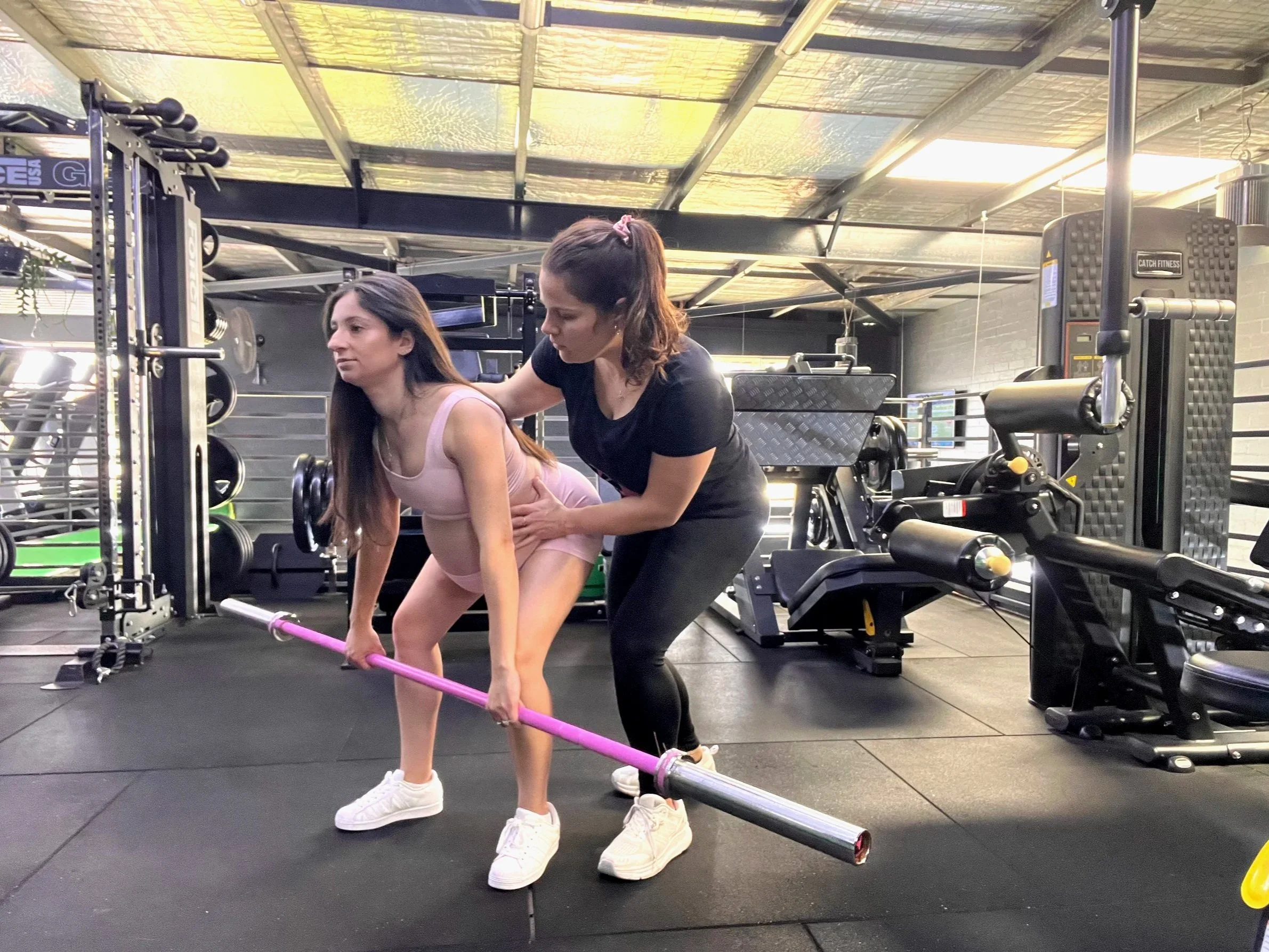
For years, pregnant women have been told some version of: “Don’t lift heavy.”
Not because heavy lifting was proven harmful — but because we didn’t have enough direct research to confidently say what happens to mum and baby during higher-intensity resistance training.
That’s changing.
Recent work involving Dr Margie (Margaret) Davenport and colleagues has started filling a major gap: measuring real maternal and fetal responses during resistance training (not just general “exercise”).
This post breaks down what the research actually says, what it doesn’t say yet, and how to apply it in a calm, evidence-led way.
Why the “don’t lift heavy” message became so common
Pregnancy guidelines have historically prioritised safety — understandably. When direct data is missing, recommendations often lean conservative.
We do have strong evidence supporting physical activity in pregnancy overall, including guidance that pregnant women (without contraindications) should aim for regular activity across the week.
But higher-intensity resistance training (and questions like breath-holding, heavy loads, and “is this safe for baby?”) has been under-studied — until recently.
The study everyone is talking about: what did researchers actually test?
A key recent paper in the British Journal of Sports Medicine examined maternal and fetal responses to acute high-intensity resistance exercise during pregnancy.
What makes this important is the method: it didn’t rely on opinions or vague observations. Researchers measured real-time physiology during resistance exercise.
In short: participants performed high-intensity resistance exercises, and the research team monitored things like fetal heart rate and blood flow measures (alongside maternal responses).
What did they find?
The study’s conclusion: high-intensity resistance exercise was well tolerated by both mother and fetus (including with the Valsalva manoeuvre) in the studied population.
Important nuance: this is a controlled study looking at acute responses in a specific group (generally healthy pregnancies, in a monitored setting). It’s not a blanket “everyone should lift heavy” message — it’s evidence that the old fear narrative is too simplistic.
What the bigger body of research says about resistance training in pregnancy
Two other pieces of evidence help round out the picture:
1) A systematic review/meta-analysis on resistance training in pregnancy (2025)
A BJSM systematic review evaluated resistance training as a sole intervention or part of multi-component programmes and looked at pregnancy, delivery, fetal, and pelvic floor outcomes.
Key value of this paper: it synthesises what we know (and highlights where we still need better-quality studies).
2) Heavy resistance training outcomes (survey data, 2023)
A large survey study examined people who engaged in heavy prenatal resistance training (defined as lifting at least ~80% 1RM) and reported that outcomes were typical and not altered based on choices like Olympic lifting, Valsalva, or supine lifting.
Important nuance: this is observational and self-reported — useful, but not the same strength of evidence as controlled trials.
What this means for real mums (and real training)
Here’s the takeaway I want you to walk away with:
It’s not “heavy is bad” vs “heavy is good”
It’s: pregnancy training should be individual — not one-size-fits-all.
The research supports moving away from blanket fear-based rules, and toward smart programming.
Evidence-led principles I use in pregnancy strength training
1) Train by effort, not ego
Aim for a challenging-but-controlled set. A practical guide is leaving ~2–4 reps in the tank most of the time.
2) Technique stays non-negotiable
Your form is the foundation. If load changes your strategy (breath holding hard, bracing poorly, rushing reps), the load isn’t the goal — control is.
3) Breathing and pressure matter
Breath holding (Valsalva) is nuanced. The research measured tolerance in the study context British Journal of Sports Medicine+1, but your real-world approach should be guided by:
symptoms (dizziness, pressure, pain)
pelvic floor signs (heaviness, bulging, leaking)
your training history
4) Modify without making it “less effective”
You can still train hard with:
shorter range
different stance
tempo reps
different implements (DBs, cables, machines)
reduced axial loading
Who should be more cautious?
If you have pregnancy complications, pain, bleeding, signs of pelvic floor heaviness, or you’re unsure where you fit — that’s not a “don’t train” sentence. It’s a get individual advice moment.
Most guidelines emphasise screening and individualisation for safe pregnancy activity.
The bottom line
We’re finally getting higher-quality research that measures what actually happens during resistance training in pregnancy.
Controlled evidence suggests high-intensity resistance exercise can be well tolerated in healthy pregnancies, in the studied context.
Broader reviews and observational data support the idea that resistance training in pregnancy is not inherently unsafe — and that outcomes are typically normal in the populations studied.
The message isn’t “everyone should lift heavy.”
The message is: fear-based rules are being replaced by data — and training deserves nuance.
If you want help applying this to your body and your pregnancy, that’s exactly what I do inside The P3 Movement: calm, evidence-led programming that still respects the real world.
References
Moolyk AN et al. Maternal and fetal responses to acute high-intensity resistance exercise during pregnancy. British Journal of Sports Medicine (2025).
Prevett C et al. Resistance training in pregnancy: systematic review and meta-analysis… and call to action. British Journal of Sports Medicine (2025).
Prevett C et al. Impact of heavy resistance training on pregnancy and postpartum health outcomes. International Urogynecology Journal (2023).
Mottola MF et al. 2019 Canadian guideline for physical activity throughout pregnancy.
