

Returning to Strength Training After Birth: How to Progress Without Rushing
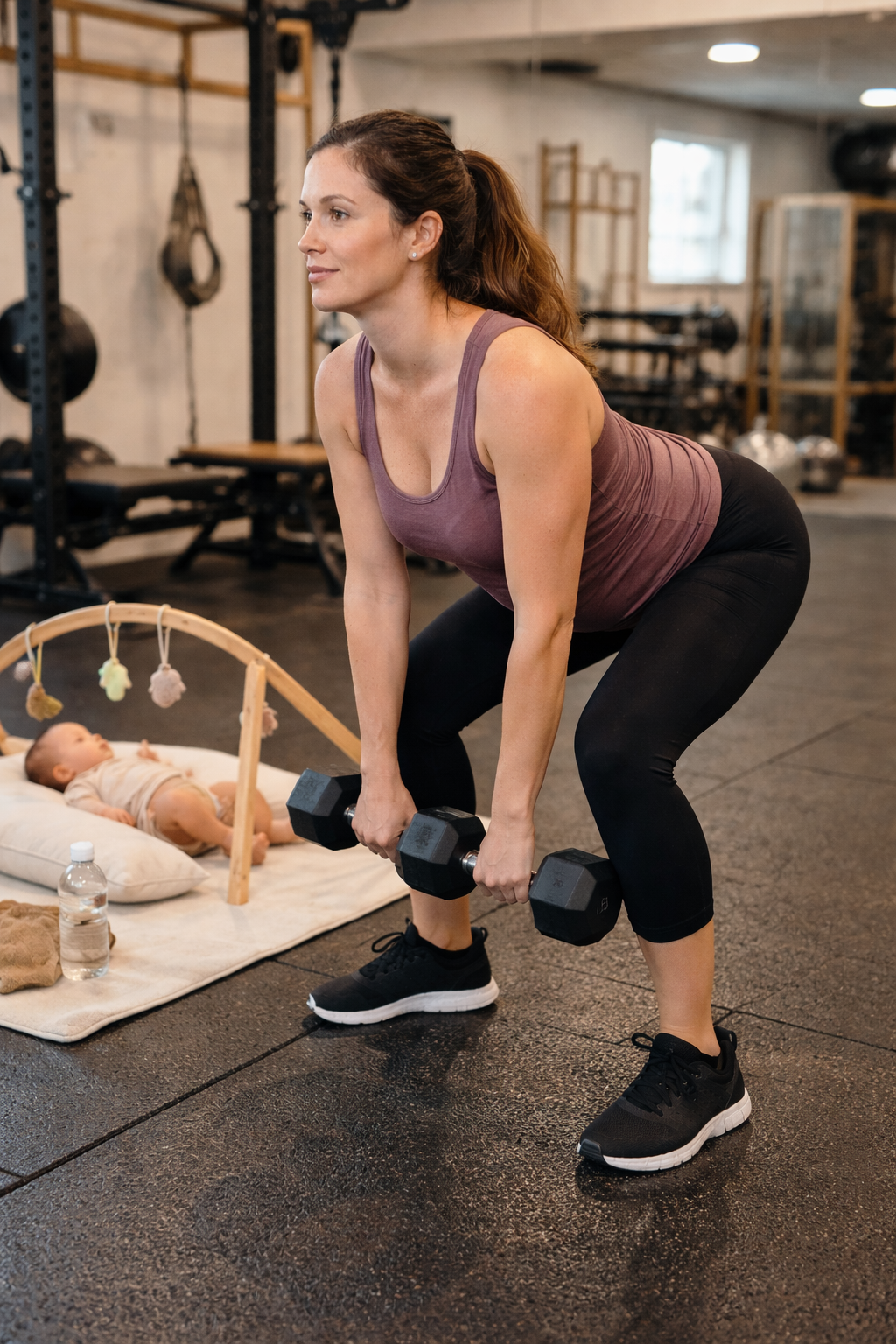
After birth, many women feel torn between two extremes.
On one side:
“I should be resting longer… I don’t want to do damage.”
On the other:
“I feel ready — but I don’t know where to start.”
The postpartum phase isn’t about bouncing back.
It’s about rebuilding capacity — slowly, deliberately, and confidently.
This post will walk you through how to return to strength training after birth without rushing, while still making meaningful progress.
First: postpartum recovery isn’t linear
No two postpartum journeys look the same.
Your return to training is influenced by:
type of birth
pregnancy symptoms
sleep and stress
feeding demands
support systems
your training history
Even women who “feel good” early on still benefit from structured progression, not jumping straight back to pre-pregnancy workouts.
Feeling capable ≠ being fully reconditioned.
Why rushing back often backfires
Many postpartum issues don’t show up immediately.
Rushing load, intensity, or volume can contribute to:
persistent core weakness
pelvic floor symptoms (leaking, heaviness, discomfort)
ongoing back or hip pain
plateaus or setbacks months later
These aren’t signs of failure — they’re signs that the body needed more time under the basics.
What “progressing properly” actually means postpartum
Progression after birth isn’t about speed.
It’s about layering foundations.
Think of postpartum training as rebuilding a system — not testing it.
Phase 1: Reconnect (early postpartum)
This phase focuses on awareness and coordination, not fatigue.
Key goals:
reconnect breath and core
restore rib cage and pelvic alignment
rebuild confidence in basic movement
establish consistency
Examples include:
breathing and pressure control
gentle core activation
low-load strength patterns
walking and daily movement
If this phase feels “too easy,” that’s okay.
Its job is to prepare you for what comes next.
Phase 2: Rebuild (foundational strength)
Once basic control and recovery are in place, strength training can become more intentional.
Focus shifts to:
controlled compound movements
progressive but manageable loads
quality over quantity
stable breathing under effort
This phase often includes:
squats, hinges, presses, rows
tempo work
unilateral exercises
rest periods that support recovery
The aim is to feel stronger week to week, not exhausted.
Phase 3: Reload (returning to higher demand)
Only once foundational strength is consistent do we begin layering:
heavier loads
higher volume
impact or dynamic work (if appropriate)
sport or performance goals
Progression here is earned — not rushed.
And importantly: not every mum needs to reach this phase to be successful.
Strength for motherhood looks different for everyone.
Signs you’re progressing at the right pace
You’re likely on track if:
strength is slowly improving
symptoms remain stable or improve
recovery feels manageable
training fits into life, not against it
confidence increases over time
Progress that feels calm is usually sustainable.
Feeling unsure where you fit in this process?
Download the free Postpartum Strength Timeline to see exactly what to focus on at each stage after birth — without rushing.
Signs you may need to slow down
Consider pulling back slightly if you notice:
pelvic floor symptoms returning
increased abdominal doming with loss of control
lingering pain or soreness
persistent fatigue
training becoming stressful instead of supportive
Slowing down is not going backwards — it’s adjusting intelligently.
A note on comparison
One of the hardest parts of postpartum training is comparison.
You may see:
other mums lifting heavier
faster “comebacks”
social media highlight reels
But comparison ignores:
individual recovery timelines
invisible symptoms
long-term outcomes
Your body isn’t behind.
It’s rebuilding.
The bottom line
Returning to strength training after birth isn’t about proving anything.
It’s about:
rebuilding trust in your body
restoring strength in a way that lasts
supporting the demands of motherhood
progressing without pressure
When you move slowly enough to listen, progress takes care of itself.
You don’t need to figure this out alone.
Start with clarity using the free Postpartum Strength Timeline.
What to read next…
If you’re unsure how to structure your return or what’s appropriate for your stage, the next post will cover:
“The Postpartum Strength Timeline: What to Focus on at Each Stage After Birth”
