

The Foundational Movements to Rebuild Before Returning to Running After Baby
If you’ve had a baby and you’re thinking about running again…
Here’s something important to know:
running is more than just “going for a jog”
It’s a high-impact activity that asks a lot from your body — especially your:
pelvic floor
core
glutes
balance
single-leg strength
and ability to absorb force
That doesn’t mean you can’t run postpartum.
It just means your body needs a few foundations first.
And no — this doesn’t need to be complicated.
Here are some of the simple things worth rebuilding before you return to running after baby.
1) Standing on one leg
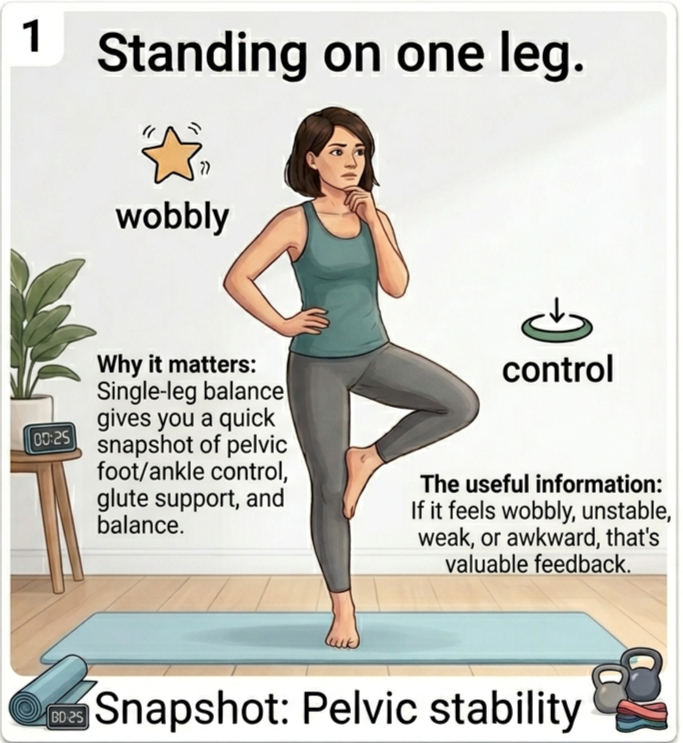
Can you comfortably stand on one leg for 20–30 seconds each side without feeling all over the place?
That’s a great place to start.
This sounds basic… because it is.
But it matters.
Running is essentially a series of repeated single-leg landings.
So if standing on one leg feels:
wobbly
unstable
weak
or awkward
that’s useful information.
Why it matters:
Single-leg balance gives you a quick snapshot of:
pelvic stability
foot/ankle control
glute support
balance
2) Heel raises / calf raises
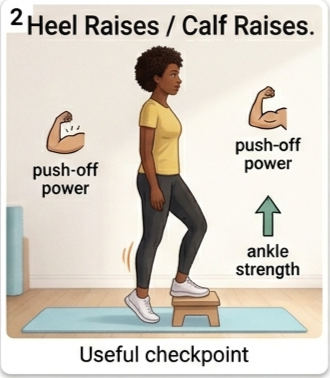
Can you do a controlled set of:
single-leg calf raises -
without pain, wobbling or feeling like one side is much weaker?
That’s a really useful checkpoint.
Your calves do a LOT when you run.
And they often get overlooked postpartum.
Why they matter:
They help with:
push-off power
ankle strength
lower leg endurance
absorbing force when running
3) Marching
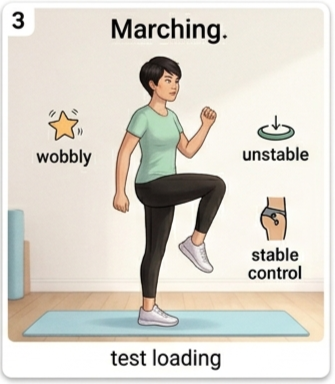
What to look for:
are you stable?
can you stay upright?
do you feel controlled?
Simple, but important.
Marching is such a good postpartum return-to-running exercise because it starts to rebuild:
balance
pelvic control
core control
hip strength
And it’s a really simple way to test how your body handles single-leg loading.
4) Glute bridge
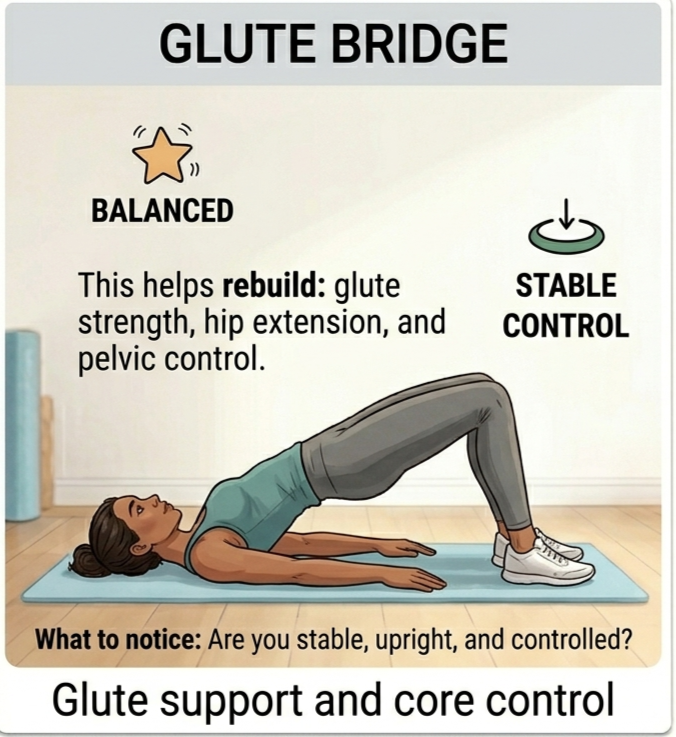
What to notice:
Can you do glute bridges without:
your hamstrings cramping
your lower back taking over
or feeling disconnected from the movement?
That tells you a lot.
Running needs glutes.
A lot of them.
And if your glutes aren’t doing their job well, your body often tries to compensate elsewhere.
Why it matters:
This helps rebuild:
glute strength
hip extension
pelvic control
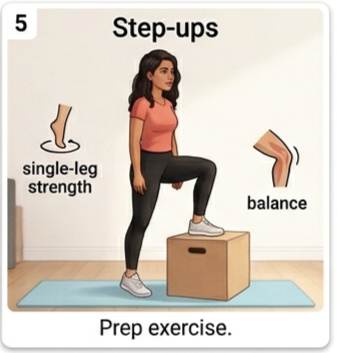
5) Step-ups
Why they matter:
If step-ups feel unstable or hard to control, your body may need a bit more strength and support before adding impact.
Step-ups are one of the best return-to-running prep exercises because they challenge:
single-leg strength
pelvic stability
balance
control
All of which matter when you run.
6) Split squats
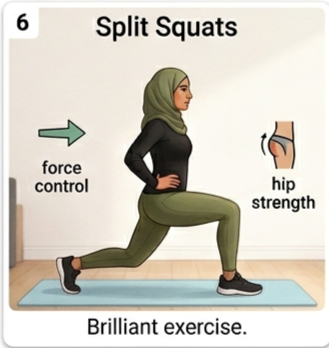
What to notice:
Can you move through them with control?
Or do you feel:
wobbly
weak
uneven
or unstable?
That gives you useful feedback.
This is a brilliant exercise for rebuilding running strength postpartum.
Why?
Because it helps prepare your body for:
single-leg loading
force control
hip and glute strength
pelvic stability
And all of that matters way more than people realise.
7) Core control with movement
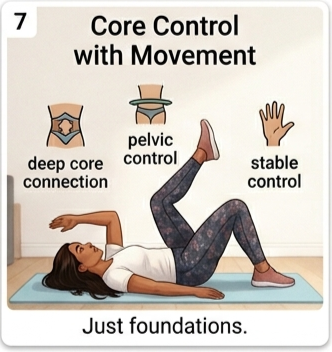
Great starting exercises:
dead bugs
heel slides
marching core drills
Nothing flashy.
Just foundations.
Before returning to running, it helps to make sure your body can manage movement without feeling like everything is a bit chaotic.
This doesn’t mean doing endless ab exercises.
It means rebuilding:
control
pressure management
coordination
8) Small impact prep
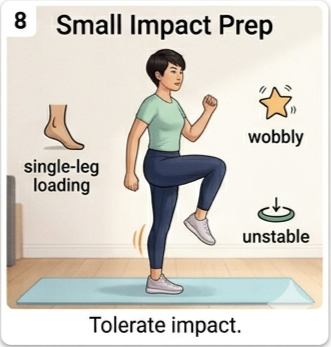
Think:
mini hops
pogo hops
skipping
light bounce drills
Before running, your body also needs to tolerate:
impact
That doesn’t mean you need to start sprinting.
But it does mean it’s helpful to rebuild some gentle impact first.
If even tiny impact feels:
heavy
uncomfortable
leaky
unstable
or just “off”
That’s worth paying attention to.
A really important reminder…
This isn’t about needing to “pass” a perfect running test before you’re allowed to run again.
It’s about asking:
Does my body feel ready for what running asks of it?
That’s a much more helpful question.
Because postpartum return to running shouldn’t be based on:
pressure
timelines
or just hoping for the best
It should be based on:
What your body is actually telling you
If some of these feel hard… that’s okay
That doesn’t mean:
“You can’t run”
It just means:
Your body may need a bit more rebuilding first
And honestly?
That’s a much better place to start from than pushing through symptoms and ending up frustrated.
Need help figuring out where to start?
At The P3 Movement, we help mums rebuild strength and confidence so they can return to movement in a way that actually supports their body.
Book a free consult
and let’s talk through your next step.
